Showing posts with label anxiety. Show all posts

Wednesday, June 21, 2017

Light Sensitivity (Photophobia) and Migraine

FB_IMG_1497906193635
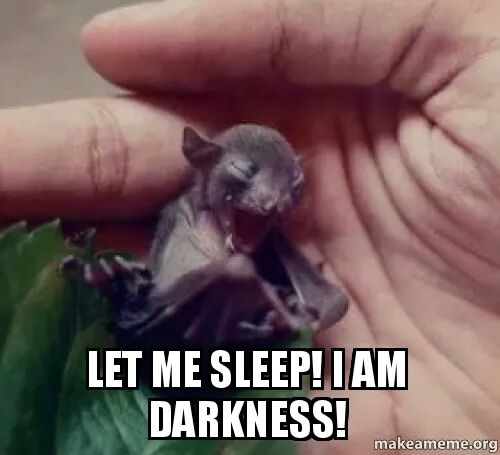
Said everyone with light sensitivity accompanying/preceding a migraine attack ever. (Too bad we often can’t sleep through the symptoms…sigh.)

Photosensitivity is a term used to describe an abnormal sensitivity to light. For practitioners, photosensitivity is a vexing symptom since the pathophysiology of its cause is not well understood and little is known about appropriate treatment. For the patient who has the symptom, disability may ensue and frustration from lack of understanding of the medical community can be prevalent.

Terminology

The term “photophobia” is somewhat of a misnomer since phobia refers to a fear of light. We use the word to denote patients who have an abnormal sensitivity to light. While all of us have experienced an uncomfortable sensation when we have gone from a darkly lit room or theatre to the bright outdoors, we soon adapt to the sensation and the light is comfortable again. However, in some patients, bright lights—even normal lights—are always experienced as uncomfortable. “Photo-oculodynia” refers to a non-painful light source producing pain in the eye. “Dazzling” is a term used when things appear too bright, but, while everything is bright overall, the light is not bothersome or painful.

Etiology of Photophobia

Many conditions cause photophobia, and the most common condition is migraine. Indeed, photophobia is one of the cardinal features and appears prominently in the International Headache Society’s classification of migraine. Photophobia has been shown to be present during and in between migraine attacks. Furthermore, just having the symptom of photophobia predicts that the individual has underlying migraine (Muelleners et al).
For many of us, light sensitivity is a real problem; not only can it accompany or be the first sign of an attack–it can set off an attack. Some chronic migraineurs find that for them, photosensitivity becomes persistent to the point of being a constant (I’m one of them–um…yay? Do I get a prize? Maybe sunglasses…). Some of us end up getting tinted lenses or wearing sunglasses indoors on a regular basis.
For me, being daily chronic and constantly light sensitive, sunlight and fluorescent lighting are my worst enemies (why I don’t tan and rock the Casper look). At worst, they can cause pain to flare horribly. At best, they’re a low key irritant that raises my symptomatic level a notch or two.
I avoid fluorescents if at all possible, but unfortunately grocery shopping is a must (can’t starve myself despite nausea trying, and the others in my house kinda like food). Fluorescent lighting and bad music on the overhead, not to mention loud announcements and sometimes loud customers make grocery shopping my personal hell. I’m always wiped out and feel lousy (or lousier) afterwards.
Nighttime driving with photophobia? HAHAHAHA…not on my agenda unless it’s an emergency, for a few reasons:
1. Headlights.
All I see coming at me–no road, no traffic lines; JUST. HEADLIGHTS. BLINDING. ME.
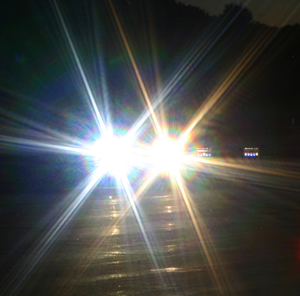
headlightglare
2. “Does that vehicle have double headlights, or am I seeing double again?”
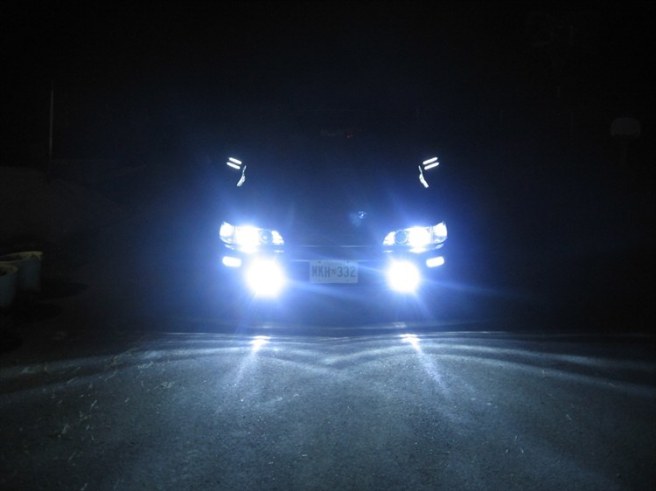
8013952105_large
3. HALOS AROUND ANYTHING REFLECTIVE. HALOS AROUND LIGHTS. AND WHATEVER THAT LOVELY PHENOMENON IS IN THE BOTTOM PICTURE.
Sure, they’re pretty. They’re also a huge distraction while driving. Not entirely certain if this is an aura or a photophobia thing, but yeah. The first time I saw halos around reflective stuff, I said to my son, “Look! Pretty!” And nearly drove into a ditch because I was so distracted.

4. No pic for this one, but:
“Are those colored halogens in my rear view? Or multicolored halos? Or are those police lights?”
(Please tell me I’m not the only who has that happen.)
5. THIS. FEELING. RIGHT HERE.
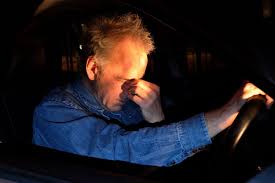
images (1)
Yeah, I’ll pass, thanks.
Photophobia, thou art a scourge upon mine eyes!
-Selena
#MigraineAndHeadacheDisorderAwarenessMonth #MHAM #migraine #chronicmigraine #spreadawarenessnotstigma #NotAHeadache #DownTheRabbitHole #photophobia

Wednesday, May 31, 2017

Migraine Can Be Deadly. (Yes, Really.)


On the last day of Mental Health Awareness Month, I'd like to highlight the importance of mental health in conjunction with chronic pain/ illness/migraine.

I can say that having found the migraine community shortly after this young woman's death, I was profoundly and deeply affected by Melissa's story.
Having progressed to daily chronic myself a relatively short time before, I was struggling to deal with the pain, the stigma, and still searching for answers that at the time didn't exist or weren't widely known.

I approached the 3 year mark of my daily chronic migraine existence with trepidation because of Melissa's story, wondering what might be the day I gave up hope...and although I passed it with some relief that I hadn't harmed myself, I WAS haunted by the "It could have been me" thoughts, as I did have frequent thoughts of suicide and even a plan on a few occasions.

I'm glad to say I got help for the crushing depression I felt then; although it's by no means a cure, it does help me cope exponentially better.

Many of us are still lost there, though.

During a livestream Q&A I did on Chronic Illness on The Mighty, I touched on the story of Melissa's loss and how it affected me although I'd never had the chance to know her, and included her in my reasons that I feel so strongly about stressing the importance and relation to mental health and chronic pain/illness.

She still is a large reason that I do this.
My others are the my own experiences, my family, and the countless others who are in the trenches fighting this battle at any given time.

Yes, migraine can kill. It kills through depression, though loss of hope, and through suicide.
Yet it still isn't seen as the monstrous disease that it is.

I want to help change that. For Melissa and for every one of us.

- Selena

"The migraine community is deeply shaken by this young woman’s suicide. Those who knew her are crushed by the loss of a vibrant, warm-hearted, loving person who was only 22. And I believe that those who didn’t are haunted by the niggling thought, “It could have been me.” Even the chronic migraineurs who haven’t seriously considered suicide know the feeling of not wanting to live like this anymore. It is not that we want to die, but that the daily struggle of chronic migraine feels like it is too much to bear and the light at the end of the tunnel often seems nonexistent."
(Quote from The Daily Headache)


Tuesday, May 16, 2017

Confessions of a Chronic Daily Migraineur

Confessions of a Chronic Daily Migraineur: Sometimes I Suck as a Person.


 What kind of a jerk would say this?
Or think it?
Me, occasionally, right before mentally giving myself a swift kick for thinking it.  
 

Being chronically ill doesn't necessarily make us kinder or more understanding of others, but it can if we let ourselves take that lesson from it.

For that to take root, it has to be cultivated. And cultivated. And cultivated.

How does one cultivate compassion? By first being honest with ourselves....even when it's not pretty. 

1. I sometimes get jealous of my friends. 
Healthy ones because they're healthy, and ones who aren't healthy that have pain free days because they have pain free days.

2. I feel immediate guilt for thinking they are somehow luckier than me, because logically and emotionally I know better than that.

3. I give myself a mental kick in the butt for such a knee-jerk stupid feeling, because one of the main reasons I advocate for awareness is that I hope it may help others from ending up like me.

4. I try my hardest to never show my friends when I feel this way, but I'm often worried I'll fail at it.

5. This is a hard thing to admit and I feel like a jerk.

6. This doesn't mean I'm not happy for them when they share good news or have a good life, and definitely not that I want them to stop sharing either good or bad things with me. I still want to them to not feel guilty about confiding in me.

7. I think many who are chronically ill can relate. And that they hate to be able to relate.

8. I think a lot of us are afraid to admit the less pretty side of what being constantly physically miserable can make us feel.

9. I think we're afraid of being seen in a negative light, especially since we feel the sting of stigma already.

10. Being honest is important, especially to ourselves.

What do we do with this kind of honesty and self discovery?
We work to counter it.

Sometimes we fail, sometimes we succeed.  And whichever it is today, we give ourselves the compassion and the room to be human and fallible.

And then we pass that same compassion and understanding along to others.

Monday, May 15, 2017

Not "JUST" a Headache is an Inadequate Description of Migraine


I know this may be an unpopular post for many migraineurs, but I've got to say it:

I don't like the "not just a headache" thing. In fact, it drives me nuts. Why?

Because it's incorrect, and it still basically says that "migraine = headache plus some other things."

Migraine is not a "headache + some other things."
Migraine = NOT a headache at all.
Migraine = complicated neurological genetic disorder with a plethora of possible symptoms...one of which MAY or may not be pain. 
 
Not all migraineurs have head pain as a symptom.
Some migraineurs have abdominal pain instead of head pain. 
And no matter where you fall on the symptomatic spectrum, migraine attacks can be disabling, with or without pain. 

I really have to wonder how much we ourselves add to misconceptions and stigma by embracing the "not JUST a headache" movement. Why of all things did this become our rallying cry? Was this how we thought it would be more relatable to non migraineurs? 
Because if so, I think it's pretty much proven otherwise.

And worse, not only does it not make it easier for others to relate, it excludes many migraineurs and contributes to lack of knowledge and misconceptions, even within the migraine community.

Why are we using a phrase that limits migraine to a "headache + some other things" when we already feel we're not taken seriously as having a real illness?


Sunday, May 14, 2017

Mental Health Awareness Month: Spotlight on BPD (Borderline Personality Disorder)

IN MY LAST POST, I EXPLAINED THAT MENTAL HEALTH AWARENESS MONTH IS IMPORTANT TO ME. 
THIS POST HIGHLIGHTS ONE OF THE REASONS WHY.

***WARNING: IF YOU HAVE ATTEMPTED SUICIDE OR ARE A SUICIDE ATTEMPT SURVIVOR THE FOLLOWING POST MAY BE TRIGGERING***

Today, I read a post that made me think about how the stigma of borderline personality disorder (BPD) can lead to its diagnosis becoming a self-fulfilling prophecy. This quote in particular really hit home:
“Talking semantics may seem oversensitive, but the rhetoric surrounding BPD has got to change. Stop painting us as delirious, insane, selfish, dramatic, manipulative, etc. We’re battling a cruel, ugly monster that most people won’t understand, and we need help just as much as anyone else living with mental illness.”
BPD is all too commonly seen as a hopeless diagnosis, even by many mental health professionals. For most of my daughter’s teen years, she was in and out of psychiatric hospitals, attempted suicide several times and self-harmed. She was in the juvenile justice system and abused drugs. She was diagnosed with bipolar disorder, but I was positive this was not what she had. My son has bipolar disorder, and while I’m fully aware it doesn’t present the same for everyone, the diagnosis didn’t seem to fit her symptoms.
I had started doing my own research into mental disorders when my son was diagnosed a few years before, and something I read was niggling at my brain. I looked up borderline personality disorder. The description fit her perfectly. Every trait was dead on.
Her doctors refused to entertain the thought that it might be BPD. What did I know? I was only her mother, and they were licensed mental health professionals. I was met with condescension for the most part until she was 15, when a suicide attempt landed her in the hospital yet again and the doctor treating her had more concern for her welfare. He agreed that her behaviors and thought patterns absolutely fit the description of borderline personality disorder and suggested we find a therapist certified in cognitive behavioral therapy (CBT).
Still, we almost exclusively heard medication and therapy were “not likely to be terribly effective, so we hate to saddle someone with that diagnosis.” Her official diagnosis remained bipolar disorder, but it was added that she had borderline traits in the interest of getting help geared toward her needs.
But what we discovered repeatedly was that instead of her needs being met, the misconceptions and stigma of BPD often meant she was written off as a “hopeless case” by many. Some therapists and psychiatrists still hold this view, and their clients suffer for it, even to the extent of being given up on or not accepted as patients.
We had one nurse tell us to hang in there, that she had BPD but was finally doing better. The therapist we found was encouraging and wonderful. Only two people amid a sea of professionals were hopeful.
Why is BPD so stigmatized?
Some of the most widely known traits of BPD are often seen as character faults a person could “just change if they really wanted to.” Traits such as attention seeking, intense emotional reactions and manipulative behaviors. In a teenager, they’re often blown off as being “dramatic” or “acting out.”
It’s not that simple. BPD is a disorder, not a state of mind. Treatment can help a person mitigate and manage those traits, but one cannot just “decide not to be that way.”
I’ve frequently seen it said that treatment doesn’t help because those with BPD often don’t seek it or think they don’t need it. This idea is misleading because a number of people with other mental illnesses also don’t seek treatment, think they’re OK or think they don’t need it. Yet BPD is the disorder most commonly associated with this belief. BPD is too often treated as the “redheaded stepchild” of mental disorders, even among others who have mental health disorders.
With these and other misconceptions about BPD, is it any wonder many give up hope or lack support?
The amount of negative information or misinformation about BPD and the lack of positive information on the internet is appalling, which inspired my now-adult daughter to write an encouraging article about parenting with BPD which was published on The Mighty.
BPD is not a hopeless diagnosis. My daughter may still have room for improvement (don’t we all?), but over the past five years, she’s made amazing strides. She stopped using drugs and has been sober for five years, she’s back in therapy, she’s maintaining well and she is a wonderful mother to my “grandspawn.” She’s reached out to encourage others with BPD via the article she published. I’m incredibly proud of her and all of she’s done and is doing for herself and her son.
BPD is not a hopeless diagnosis. The right therapy for an individual, a good doctor, perhaps medication for associated illnesses like depressionanxiety and a strong support network — these can make an invaluable difference for a person struggling with BPD.
And aren’t our loved ones and ourselves invaluable enough to deserve those things?
My daughter is living proof that BPD isn’t a hopeless diagnosis, as are many others. But a great many need hope. Let’s help spread that hope for them instead of stigma.

Friday, May 12, 2017

Mental Health Matters As Much As "Physical" Health

May is another favorite advocacy month for me: Mental Health Awareness Month.


If you've read any of my previous blog posts, you'll know that mental health is an important subject for me, both in conjunction with chronic illness and on its own.
If you think I stress mental health awareness as it is, buckle up, because I'm going to really focus on it this month.

Mental illness has impacted my life in many areas; both of my birth kids have mental disorders, my 2 adopted kids have both had some issues with depression and trauma, I have depression and anxiety, and I have friends who live with mental illness as well. Currently, the hashtag #1in4 is trending, because 1 in 4 people have mental health issues. Chances are that if you are not the 1 in 4, you know someone who is.

Although we have evolved into a society that is more accepting of mental illness, stigma is alive and well, even within the mental health community. We have more awareness and openness about depression, anxiety, and bipolar disorder, but many other mental illnesses continue to be bypassed or misunderstood.

This month I'll be focusing on the mental health issues that have affected my life.

Happy Mental Health Awareness Month and spread awareness, not stigma!


Saturday, April 8, 2017

Turning Pain Into Poetry

I love April.

April is not only my birthday month, it's National Poetry Month here in the US.

I've loved and written poetry for as long as I can remember. To me, it's as necessary as the air I breathe. So it was natural for me to incorporate my illnesses into my writing when I started progressing from episodic migraine to daily chronic, when depression had the upper hand, when traumatic memories came knocking, and when life in general dealt out lemons.

It's also my self therapy (I despise journaling personally) and a part of how I reach out to others...nothing says "me too" like reading your own thoughts, struggles, pain, loves, or triumphs in blazing emotion from another person.


And there's nothing like that "I'm not the only one" moment. I know because I've been there--from being an abuse and domestic violence victim to motherhood to depression to chronic illness to life in general to beautiful moments.


Turning pain into poetry...into a blog post...into art...into outreach...into advocacy...into connection with others.
I have never subscribed to the belief that our struggles are given to us as part of a mysterious greater plan/purpose or to better us, because I don't believe God is that cruel ("Oh, let's take her niece, because then she'll write an article about grief that helps others"...seriously? That's not the God I follow), but I DO strongly believe that we can turn anything into an opportunity to help others.
In doing so, we give it our own purpose.

This National Poetry Month, I'm celebrating that purpose.


Friday, March 31, 2017

Mourning the Loss of an Advocate: Amy Bleuel


****WARNING--THIS POST MAY BE TRIGGERING IF YOU HAVE SELF HARMED, CURRENTLY SELF HARM, OR ARE A SUICIDE ATTEMPT SURVIVOR.**** 

My heart has been heavy the past few days since the report of mental health advocate Amy Bleuel's death was released.

For those who don't know who Amy was, she pioneered a network of peer support via her non-profit organization, Project Semicolon, founded in 2013. Project Semicolon exploded into social media consciousness in 2015 when pictures of semicolon tattoos inspired by the Project took off and started spreading like wildfire, but I was a follower of the Project since 2014 when I came across a photo on Facebook dedicated to Semicolon Day:


(The above photo is from 2015, but the one I came across was the same or similar.)

Project Semicolon defines itself as "dedicated to presenting hope and love for those who are struggling with mental illness, suicide, addiction and self-injury", and "exists to encourage, love and inspire."[8] While they are devoted to achieving lower suicide rates in the U.S. and worldwide, they do not themselves practice psychiatry, and the staff are not trained mental health professionals.[4] Rather, they recommend contacting emergency hotlines (e.g. 9-1-1 or the National Suicide Prevention Lifeline) or seeking mental health professionals.[9]
According to a report by the Centers for Disease Control and Prevention, suicide is the 10th leading cause of death in the United States. with 42,773 reported deaths in 2014.[10] (from Wikipedia)
I can't stress enough how important the Project was to me as someone who has a past history of self harm, who has struggled with depression and anxiety, and as a suicide attempt survivor and the mother of a suicide attempt survivor.
Amy made it okay to talk about these things more openly for so many and touched so many lives with a small punctuation mark. By nature, those who self harm tend to hide what they do. There are differing reasons and methods of self harm that I won't go into here, but the nature of the stigma has prevented many from seeking help or having hope for recovery. Suicide attempts often have similar stigmas attached, and many survivors, suicide loss survivors, or those considering suicide tend to feel alone even in the mental health community. Amy gave us a place there.

As an advocate for mental health as well as chronic illness, I admired and continue to admire Amy and her message of inclusion and support.

Amy was a suicide attempt survivor who struggled with depression and trauma PTSD herself, and whose father died by suicide. As many know, survived suicide attempts increase the risk of death by suicide in an individual. Yesterday, it was indeed confirmed that Amy died by suicide.

People tend to think mental health advocates have the answers and have conquered, but we're really still in the battle with them.

We're navigating the same waters, but don't necessarily have a lighthouse in sight, a life jacket, or even know how to swim in uncharted waters...we just know we're called to help others.
Sometimes in helping others, our own self care takes a backseat; sometimes because it's easier to focus others' problems, sometimes because we get caught up in what we do, and other times because we just don't see that we have that same safety net we try to be.

When an advocate dies by suicide, people wonder what will happen to those they reached out to.
Will they feel "cheated" or abandoned?
Will they lose hope and give up?

Such a loss does not invalidate the message or their work. It makes it more important.

Rest in peace, Amy Bleuel. Your story is still not over, and neither is your legacy.


~ Selena Marie Wilson ~

Wednesday, March 29, 2017

My Life Story, Written In Flesh


****WARNING: THIS POST MAY BE TRIGGERING IF YOU HAVE SELF HARMED, CURRENTLY SELF HARM, OR ARE A SUICIDE SURVIVOR****

I don't know a single person that doesn't have at least one scar.

Large or small, prominent or barely noticeable, every scar has a story attached; sometimes one we remember firsthand and sometimes one told to us because we were too young to remember.

This post is a celebration of all we've lived and struggled with and survived. Our scars are our story...written in flesh or carved in our minds. 

"That's from the time I was chasing my sister on my bike and she stepped in front of me. I swerved on the gravel and the road bit my face. I refer to it as one of her two attempts to kill me. ( Kidding about her intention, not about how I refer to it. )" - me

This could be an example of one my daughter might tell:

"This one is from an emergency appendectomy when I was 8. I got sick from the anesthesia, so they gave me Phenergan. Turns out I have a really bad reaction to it, my mom says I was ripping out my IVs and crawling over the bed rails until they had to give me something to make me sleep."

My friends have scar stories of their own:

"My beautiful battle scar on my upper right arm is still with me to this day! When I was 13 I was diagnosed with stage 3 Melanoma  (skin cancer). The surgeons cut away the entire cancerous section including some of my muscle. The surgery itself was 8 hours.  After months of more minor surgeries, stitches, Dr appointments, rehabilitation, and treatment I was in the clear, as in remission for 5 years." - Abby

"My favorite scar is from a c-section at 19. Frank Breach they called her. Her adoptive parents named her Alyssa. I like that name; I love her wherever she is." - Ericka

Not all scars are physical or visible, but are still carried with us and remembered vividly in a way that affects us years later:

"This one is from when I went to the ER for a severe Migraine attack. The doctor decided to give me Ketamine, also known by its street name, Special K. While rubbing his hands together and bouncing on his feet, he said to me in a giddy voice, "This will be fun!"
It was not fun. The walls moved around me and started closing in on me. The clock on the wall was making circular trips all around it. My bed felt like it was on violent waves of the sea, and I held on to the rail for dear life. My right leg disappeared. I couldn't find it. Then I felt myself fading, until my consciousness was nothing but a small speck in my chest. I thought I was going to be snuffed out for good. I screamed and screamed for help, even though I couldn't hear myself. The nurses ignored my complaints and asked if my Migraine was better. It wasn't. Shortly after, they came back with a second dose and said, "This will help."
It didn't. They left me alone for 2 hours with my hallucinations and paranoia and then sent me out the door in a wheelchair.
My Migraine was still not better." - Brianna

"These are from years of mental and emotional abuse from my father. They aren't all healed even now, 20+ years later." - me

"This one is from my father walking out on us." - anonymous

"My invisible scar is from being raped." - anonymous

Some scars are visible, but not understood...often those who carry them try to keep them hidden because of reactions based on the stigma attached, rather than compassion.

"Are you talking about physical scars or emotional/psychological scars as well? You could write a book on my psychological/emotional alone, but the physical one would be my body. I eat my feelings so it shouldn't surprise me that I look like I do. There are a few others from when I was cutting myself but they are hidden really well. Another thing is since I have always researched any diagnosis and/or test result is I also research the treatments so when I was cutting myself I knew where not to cut. I was mindful of being able to hide them." - Malinda

" These are from years of self harm--for me, it was easier to deal with the physical pain than the emotional pain. Some are hidden, some aren't; they are the days when the only thing that mattered was the physical pain to shield and distract me from emotional anguish." - me

"This one is from a suicide attempt." - anonymous

"I never hid my self harm scars. But people pretended not to notice because it was easier than admitting to themselves I needed help." - anonymous

"My scars are proof that I fought my demons and survived myself.  They are a reminder of my struggles I've conquered." - me

Sometimes scars are something that helps us relate to others or reminders that others are fighting battles we can't always see. No matter which they are, our scars are part of us and of our story and can be used as a source of triumph over the things we've come through.

May your story be a tale of triumph and compassion. 

Tuesday, January 31, 2017

When the Chronic Illness Monster...is You

You know, many of us chronically ill/disabled folks complain about people who are inconsiderate/insulting/disbelieving/offensive/etc...And in many cases we are justified in calling out such behaviors and advocating for ourselves and others--we are not any less deserving of courtesy and respect than those who are healthy.

But on the flip side, we can also sometimes be at fault or inconsiderate and self absorbed--being chronically ill may make us more empathetic toward others, but it doesn't mean we're always "on" with it...and boy, have I heard or seen posts from some of us who consider themselves blameless when they say or do some ugly things, because "I'm so miserable, of course I'm b****y! What do people expect?"
Or who complain about people not making an effort to be in our lives...and don't notice the ones who were there quietly slipping away because WE didn't make an effort.

I'm not talking about an effort to meet expectations that our illness makes unrealistic; I'm talking about things like a text now and then to ask THEM how they are (none of that "but I'm worse off than they are!" crap. Of course we think they are if they're healthy...but don't we know damn well looks are deceiving? Everyone has some kind of struggle, and what they're dealing with may seem small to us, but it isn’t for them); a call to ask how something they're involved with went; an effort to get together on one of our "good" days, even it's only sitting on their couch.

I've been guilty of it recently--not being a good friend.
And worse, it was with my daughter, who has some health issues and an almost-4-year-old, but who has made more effort and time for me than I have over the last little while.

And it's so, so easy for us to put things off when we are struggling...that phone call you'll make tomorrow if you feel "better," that text you forgot to send today, that message on Facebook to the friend across the globe who is dealing with a problem, that attempt to reschedule plans you had to cancel with your family...that can wait another day, right? Because you feel just hideous right now and your depression is raging...one more day won't hurt.

But it CAN  hurt.
It hurts them. Especially if they are the ones who have given us unconditional support and we put them off like an unpleasant task because our bad day is priority...and they are the ones who always give us consideration on our bad days.

Our bad days are far more numerous than our "good" ones. How many do we continue to put off the things we don't feel up to?
People are not things to put off.
We think we know that...Of course they're important to
us.
But do they know it when we don't make sure to show it?

We always think there's time...until sometimes there isn't.

Luckily, I woke up and realized there might be more than just her being busy with her own life that was causing a distance between us...and that it might be me. And I asked. And she came over and bitched me out good. 

And instead of justifying it with an "I've been miserable and depressed for the last 3 months," I agreed that I was an inconsiderate b**** and had been a lousy mom and grandma...because I was.
No amount of being sick and depressed excuses it.

Luckily, she is probably more forgiving than I tend to be.
Luckily, nothing happened during that time that makes reconciliation impossible.
Luckily, I can see what a jerk I was to the people around me...the ones who care most. I can see that I adopted the "It's okay because I'm sick" mindset that I've always despised in others...and I can admit it to myself and those who I care about.

I've been a jerk.
Luckily, I have people who will tell me when I am one, because they are what keeps me real.

And last but not least, luckily she was okay with this being turned into a blog post, because hopefully it'll help keep someone else real.

Don't be that jerk because of your illness. It doesn't give you a free pass. It just makes you an unlikable ass.

Sunday, January 15, 2017

What Does Chronic Migraine "Look Like," Anyway?

Chronic migraine is defined as 15 or more pain/migraine symptom days per month, but for quite a few of us it progresses to much more–daily or 24/7 symptoms and suffering.
It’s also called an “invisible” disorder, meaning you can’t see it, which often leads to skeptical reactions from medical professionals, employers, coworkers, and sometimes even friends and family.
It’s a bit odd to me that so many disorders and diseases are referred to as invisible when their effects wreak such obvious havoc on our bodies and in our lives. I tend to believe that they can be visible…for those who wish to look past the surface.
Here are some of the things chronic daily migraine looks like to me.

It looks like fighting to prove you’re disabled to those who can’t see it.

It looks like cancelled plans for the umpteenth time.

It looks like friends who stop inviting you out, but who can’t or don’t come visit you.

It looks like days in bed in the dark when your family is in the living room watching TV, laughing, and talking.

It looks like a messy house, unwashed dishes, and sitting on the couch in pjs wishing you could clean it up but knowing you can’t.

It looks like days missing who you used to be and what you could once do without planning exhaustively for a bad episode.

It looks like a beautiful day outside with you looking out the window from your bed.

It looks like feeling worthless and alone.

It looks like unbrushed hair and no makeup, because no one is coming to see you or you can’t tolerate visitors and you can’t stand the pain long enough to get pretty (or passable) anyway.

It looks like missing time with your grandkids.

It looks like people who think or say “you can’t be THAT sick all the time” or “aren’t there treatments for that?” or “God won’t give you more than you can handle.”

It looks like prescription bottles and a medication schedule and side effects and treatments no one would volunteer for unless their disease was much worse.

It looks like suggestions to “cure” you that range from “have you tried cutting ____ out of your diet?” to “I hear this body piercing gets rid of migraines” to “you should exercise more” to “doesn’t sex get rid of headaches?”

It looks like being asked “you still have that?” after 5 years of telling people what “chronic” means.

It looks like feeling “okay enough” to do laundry OR do dishes, but not both and definitely nothing more.

It looks like people who say “but you LOOK great!” or “but you don’t LOOK sick!”

It looks like countless medical tests with inconclusive results because there is no test to prove the existence of migraine disorder…only ones that rule out other possible causes.

It looks like explaining for the thousandth time that migraine is a genetic neurological disorder that affects the entire body and NOT a headache.

It looks like rescheduling a doctor appointment because you’re too sick to drive.

It looks like people sniggering behind you about “What [drug/other speculation] you must be on” because you can’t walk straight courtesy of aura or vertigo or both.

It looks like disbelief when you list your symptoms, diagnosis, and pain level at the ER.

It looks like uninformed and under educated medical care unless you see a specialist.

It looks like inconsistent or rationed treatment because of the expense of medication and specialist visits.

It looks like a years on end long list of ineffective treatments you’ve tried and that have failed.

It looks like someone who had a perfect 4.0 GPA feeling dumbed down because she now has trouble finding the right words, remembering things, and making once-easy connections.

It looks like your specialist telling you very gently, “There’s not much to try beyond this, and these are the odds it will help…but even if it doesn’t I’m not giving up on you.”

It looks like depression, suicidal thoughts, and anxiety about the uncertainty of each day and the future.

It looks like new symptoms cropping up and surprising you unpleasantly.

It looks like your mother telling you that the birthday gift she’d like most would be you getting to have a good day with less pain.

It looks like your boyfriend feeling helpless because he’s a “fixer” and he can’t do anything for you but be there (or if you are a grumpy sick person on really bad days like me, leave you alone).

It also looks like your boyfriend learning about your disorder and patience and limits right along with you.

It looks like learning to live with a much-limited sex life.

It looks like finding new ways to define yourself and a new idea of self worth.

It looks like smiling in front of strangers or people you don’t want to worry as if the pain and other symptoms aren’t breaking you.

It looks like finding the beauty in small things.

It looks like learning to appreciate small accomplishments you never would have thought twice about otherwise.

It looks like bad days when you envy those who can afford to go to the doctor for checkups and preventive care while you are debating if you can afford to take your last abortive dose for the month…mid month.

It looks like a repeated cycle of the stages of grief in no particular order as you grapple with the old life you lost and acceptance of the life you didn’t choose.

It looks like learning to cherish the good moments and to hang on to them for all they’re worth as a buffer against the bad and unbearable days.

It looks like nothing to those on the outside looking in and everything to those living it.

It looks like me.

And it looks like him…and her…and millions of us struggling every day with something no one else can see.