Showing posts with label chronic migraine. Show all posts

Wednesday, June 21, 2017

Light Sensitivity (Photophobia) and Migraine

FB_IMG_1497906193635
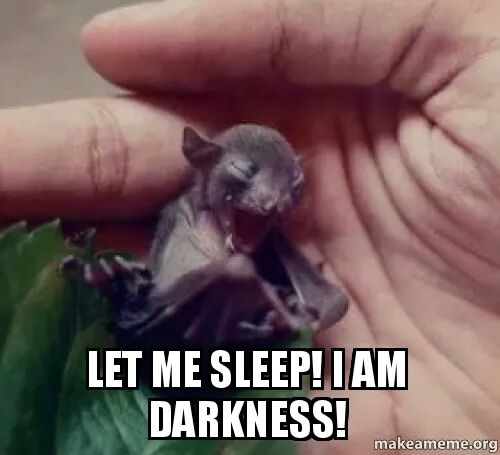
Said everyone with light sensitivity accompanying/preceding a migraine attack ever. (Too bad we often can’t sleep through the symptoms…sigh.)

Photosensitivity is a term used to describe an abnormal sensitivity to light. For practitioners, photosensitivity is a vexing symptom since the pathophysiology of its cause is not well understood and little is known about appropriate treatment. For the patient who has the symptom, disability may ensue and frustration from lack of understanding of the medical community can be prevalent.

Terminology

The term “photophobia” is somewhat of a misnomer since phobia refers to a fear of light. We use the word to denote patients who have an abnormal sensitivity to light. While all of us have experienced an uncomfortable sensation when we have gone from a darkly lit room or theatre to the bright outdoors, we soon adapt to the sensation and the light is comfortable again. However, in some patients, bright lights—even normal lights—are always experienced as uncomfortable. “Photo-oculodynia” refers to a non-painful light source producing pain in the eye. “Dazzling” is a term used when things appear too bright, but, while everything is bright overall, the light is not bothersome or painful.

Etiology of Photophobia

Many conditions cause photophobia, and the most common condition is migraine. Indeed, photophobia is one of the cardinal features and appears prominently in the International Headache Society’s classification of migraine. Photophobia has been shown to be present during and in between migraine attacks. Furthermore, just having the symptom of photophobia predicts that the individual has underlying migraine (Muelleners et al).
For many of us, light sensitivity is a real problem; not only can it accompany or be the first sign of an attack–it can set off an attack. Some chronic migraineurs find that for them, photosensitivity becomes persistent to the point of being a constant (I’m one of them–um…yay? Do I get a prize? Maybe sunglasses…). Some of us end up getting tinted lenses or wearing sunglasses indoors on a regular basis.
For me, being daily chronic and constantly light sensitive, sunlight and fluorescent lighting are my worst enemies (why I don’t tan and rock the Casper look). At worst, they can cause pain to flare horribly. At best, they’re a low key irritant that raises my symptomatic level a notch or two.
I avoid fluorescents if at all possible, but unfortunately grocery shopping is a must (can’t starve myself despite nausea trying, and the others in my house kinda like food). Fluorescent lighting and bad music on the overhead, not to mention loud announcements and sometimes loud customers make grocery shopping my personal hell. I’m always wiped out and feel lousy (or lousier) afterwards.
Nighttime driving with photophobia? HAHAHAHA…not on my agenda unless it’s an emergency, for a few reasons:
1. Headlights.
All I see coming at me–no road, no traffic lines; JUST. HEADLIGHTS. BLINDING. ME.
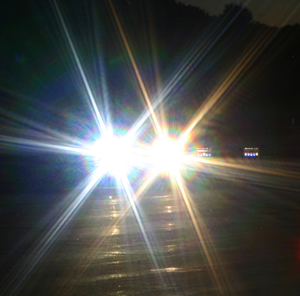
headlightglare
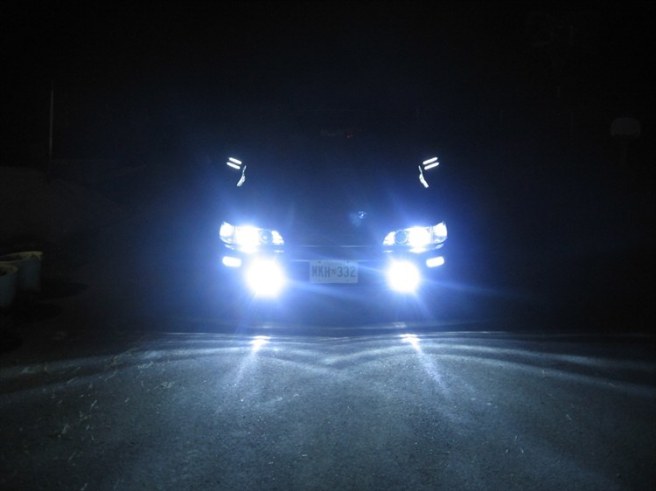
2. “Does that vehicle have double headlights, or am I seeing double again?”
8013952105_large
3. HALOS AROUND ANYTHING REFLECTIVE. HALOS AROUND LIGHTS. AND WHATEVER THAT LOVELY PHENOMENON IS IN THE BOTTOM PICTURE.
Sure, they’re pretty. They’re also a huge distraction while driving. Not entirely certain if this is an aura or a photophobia thing, but yeah. The first time I saw halos around reflective stuff, I said to my son, “Look! Pretty!” And nearly drove into a ditch because I was so distracted.

4. No pic for this one, but:
“Are those colored halogens in my rear view? Or multicolored halos? Or are those police lights?”
(Please tell me I’m not the only who has that happen.)
5. THIS. FEELING. RIGHT HERE.
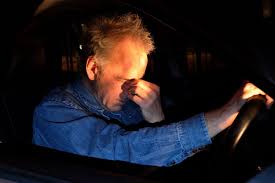
images (1)
Yeah, I’ll pass, thanks.
Photophobia, thou art a scourge upon mine eyes!
-Selena
#MigraineAndHeadacheDisorderAwarenessMonth #MHAM #migraine #chronicmigraine #spreadawarenessnotstigma #NotAHeadache #DownTheRabbitHole #photophobia

I Wear My Sunglasses At Night

The only problem with these cheap Walgreens sunglasses is they’re so dark I can’t see well at night or indoors.
Migraine causes us to be hypersensitive to stimuli around us, in the environment, or that we come in contact with, much as asthma does for someone with the condition.
Like asthma, if you don’t have migraine (which is the condition, not the individual attacks), your body is not wired to hyperreact as ours does.
Triggers (stimuli) are NOT the cause of attacks. Migraine disease is the cause.
This is a genetic neurological condition, not a headache at all. Migraine can occur without the symptom of head pain and can still be disabling.
Photophobia (light sensitivity) can occur before an attack, during an attack, and can even be a problem between attacks for many migraineurs. Since I’m daily chronic, it impacts my life in many ways (for some examples of how it affects me, read my blog post Light Sensitivity (Photophobia) and Migraine).
With the month of June being Migraine Awareness month, many organizations are working on ways to increase and spread the awareness of migraine and to try to make migraine more visible. One such group is Shades for Migraine. They have designated June 21 to be Migraine Solidarity Day and are asking for individuals to participate by wearing sunglasses all day! Since this day happens to be my birthday, I am aware that June 21st is the longest day of the year. While the importance of sunglasses may seem strange to some individuals, for those who experience photophobia it is definitely something that hits home. For many of us, sunglasses are a major life necessity for survival.
Shades for Migraine is an event to show solidarity with migraineurs and to raise awareness of migraine, and it’s on June 21st. I participate in it many days by default–I’m one of the many with migraine who have abnormal light sensitivity all of the time (“all the time” means just that–it doesn’t go away). I’m almost positive I’ll be participating tomorrow, too.
If you are also participating in Shades for Migraine, head over to my blog’s Facebook page and post some pics of you in your shades!
– Selena
#migraineurproblems #MigraineAndHeadacheDisordersAwarenessMonth #MHAM #migraine #chronicmigraine #spreadawarenessnotstigma #NotAHeadache #DownTheRabbitHole #photophobia #shadesformigraine

Saturday, June 17, 2017

Hope at a High Price

And for many of us who can’t afford an $8000+ price tag,
that’s exactly what we’ll continue doing…and doing…and doing…
I’ve been following the CGRP research and trials with both hope and trepidation–hope because they’re the first drugs developed specifically for migraine prevention and have shown a great deal of promise, and trepidation because the projected price tag is astronomical for the average sufferer.
This article gives a lower projected price than many I’ve seen, but it’s still far beyond reach for many of us.
How long will we have hope extended with one hand and snatched away with the other? Many of us with chronic migraine are disabled and unemployed due to this terrible disease. We can’t afford many CURRENT treatments with a much lower price tag, much less this one.
What good is a highly promising medication if those who need it most can’t afford it?
– Selena

"Most people think of migraine as headaches. But head pain is commonly accompanied by severe, disabling symptoms like nausea, vomiting, dizziness and sensitivity to light, sounds and smells. The disease is far more widespread than realized: About 38 million Americans, or 12% of the population, have them, according to the non-profit Migraine Research Foundation. 
But treatment options are limited. Just a handful of drugs were developed specifically for migraine, though drugs for other conditions including blood pressure and epilepsy have been found to work, too. Still, there haven’t been any new drugs in development for some time, experts say. 
A promising new group of drugs, named after calcitonin gene-related peptide (CGRP), a neurotransmitter tied to migraine, has changed that. CGRP drugs are being developed both to prevent migraines before they happen, and to stop attacks once they occur. 
The former category is closest to being available for patients. About seven million patients would likely get the treatment, estimates Evercore ISI analyst Umer Raffat, with an $8 billion to $10 billion potential market size. 
Amgen Inc. AMGN, -1.03%  has already filed for approval, and Eli Lilly & Co. LLY, -0.21%  and Teva Pharmaceuticals Industries Ltd. TEVA, +1.61%  have plans for later this year.
Alder BioPharmaceuticals Inc. ALDR, -0.85% is also developing a preventive CGRP drug, and further research on the drug class is expected at the American Headache Society’s annual meeting, which began Thursday and runs through Sunday.
 
But price and access remain a persistent question. Projections begin at about $8,500, concerning patients and headache experts alike. 
Dr. Lawrence Newman, director of the headache division at NYU Langone Medical Center and immediate past president of the American Headache Society, says that could add on to the “double whammy” of having migraines, which describes the symptoms and stigma patients face. 
“I’m concerned that the patient will again be exposed to that double whammy,” he said. “They’re made to suffer because of the disease they have and because the insurance company won’t allow them access to a potentially effective therapy.”

Read the full article at New migraine drugs have promise — and a $8,500 price tag.

#MigraineAndHeadacheDisorderAwarenessMonth #chronicmigraine #NotAHeadache #migrainenews #MHAM 

Thursday, June 15, 2017

Migraine and The Trigger Trap

Image from migraine.com 


Weather and wine and chocolate, oh MY! Those terrible triggers!

(An important distinction here before we continue: triggers are NOT what "causes" migraine. Migraine is a disease that causes sensitivity to triggers (stimuli). If one does not have migraine disease, triggers don't affect them in this manner.)

Today I came across an interesting post from a friend's Facebook about a study on triggers:

 "Our study results show that people with migraine have great difficulty identifying their personal triggers and their suspicions may be overly influenced by beliefs popularized on the internet. Unfortunately, these misperceptions lead to a lower quality of life by people avoiding many things they love but without good scientific reason,” explains Alec Mian, CEO and founder of Curelator Inc. 
The first study examined trigger suspicions in users with episodic vs. chronic migraine and revealed an unexpected disconnect between suspicions and scientific reality. Both groups suspected virtually the same set of triggers. However, after using Curelator Headache, which scientifically determines true risk factor associations, significant differences in triggers were revealed between episodic vs. chronic participants."

The funny thing about this is that it ISN'T a new idea. I've been talking about how triggers may not actually be triggers since reading a few articles in this vein a few years ago, and how triggers are often cumulative, so the most recent events or substance that pushes an attack into existence may be the one blamed, when in fact it's a progression.

Take, for instance, this article from WebMD and one on a correlating study from TIME magazine, both from 2013:

 "In his clinical practice, he sees many patients whose quality of life suffers as a result of both their migraines and their efforts to avoid triggers that they believe will lead to attacks. In addition to light and exercise, other proposed triggers include stress, emotions, and certain foods. 
But there’s little evidence that any of these things really do trigger attacks, says Goadsby. He hopes that, in addition to the current study, there will be much more research on triggers. 
“There are tens of millions of people with migraine,” says Goadsby, “and all they have to go on are tales handed down about what triggers them.”
(WebMD) 

"You eat chocolate and you get a headache. Does that mean chocolate triggers the headache?” Silberstein asks. “What probably happens is the first symptom of your migraine attack is the desire to eat chocolate. Just like when you’re pregnant, you might want pickles or ice cream. That’s one end of the spectrum, where the desire to do something is part of the migraine attack, not the trigger.”  
Distinguishing between triggers and symptoms is challenging, not just for those who study migraines but for patients as well. Silberstein says there are some known triggers, such as certain odors, hunger, chemicals in alcohol and hormonal changes linked to menstruation, but that other factors may fall somewhere between an actual trigger and a symptom. How can patients tell? “Everybody with a migraine should try to find out what is triggering their attacks,” Olesen says. “When they have a suspicion, it would be a good idea to try and see if it induces an attack. In most cases, it’s probably not going to be true.”  
Both Olesen and Silberstein say there are a number of factors that determine whether these suspected triggers will actually lead to an attack. Patients likely have individual thresholds that vary from day to day and from environment to environment: some days your brain is less vulnerable to certain triggers, while on other days the conditions might be right for a migraine."
(TIME) 
The TIME article prompted me to test some of the things I'd previously thought were my triggers, one of which was pepperoni pizza--one of my all time favorite foods and something that is high on the list of things thought to contain classic triggers (aged cheeses and aged, dried, fermented, or smoked meats).
Guess what I found? It did NOT always set off an attack. The times it seemed to were usually times I was already in danger of one, pointing to the cumulative factor, or that it wasn't one.

Now, triggers CAN change over time; as my attacks progressed to chronic, so did the things that could set them off. But many of those were environmental or cumulative. Some were unavoidable, like weather--scientists don't know why weather/barometric pressure are likely to set off attacks for so many of us, but it has shown that it does. Others were fragrances like perfumes or cleaning products (bleach is the number one).

When I became daily chronic, triggers more or less went out the window. Nothing actually set off an attack as mine was 24/7, 365, but some things could certainly worsen my pain/symptomatic level. Weather is still the most reliable one, but fluorescent lighting is up there, along with odors and certain chemicals. Too much exercise can exacerbate it, but carefully paced exercise or exertion may or may not. I seem to have a stunning zero food or drink triggers...and I suspect some of us may have less of them than we think.

One of my friends is entirely triggered by environmental allergies ; she's literally allergic to the environment.
I know allergens in the environment affect mine adversely.

The takeaway here: triggers may not be what we've thought they were, either in what we think they are or in their influence on migraine. This may not change how you see them, but it's worth following.  

Wednesday, May 31, 2017

Migraine Can Be Deadly. (Yes, Really.)


On the last day of Mental Health Awareness Month, I'd like to highlight the importance of mental health in conjunction with chronic pain/ illness/migraine.

I can say that having found the migraine community shortly after this young woman's death, I was profoundly and deeply affected by Melissa's story.
Having progressed to daily chronic myself a relatively short time before, I was struggling to deal with the pain, the stigma, and still searching for answers that at the time didn't exist or weren't widely known.

I approached the 3 year mark of my daily chronic migraine existence with trepidation because of Melissa's story, wondering what might be the day I gave up hope...and although I passed it with some relief that I hadn't harmed myself, I WAS haunted by the "It could have been me" thoughts, as I did have frequent thoughts of suicide and even a plan on a few occasions.

I'm glad to say I got help for the crushing depression I felt then; although it's by no means a cure, it does help me cope exponentially better.

Many of us are still lost there, though.

During a livestream Q&A I did on Chronic Illness on The Mighty, I touched on the story of Melissa's loss and how it affected me although I'd never had the chance to know her, and included her in my reasons that I feel so strongly about stressing the importance and relation to mental health and chronic pain/illness.

She still is a large reason that I do this.
My others are the my own experiences, my family, and the countless others who are in the trenches fighting this battle at any given time.

Yes, migraine can kill. It kills through depression, though loss of hope, and through suicide.
Yet it still isn't seen as the monstrous disease that it is.

I want to help change that. For Melissa and for every one of us.

- Selena

"The migraine community is deeply shaken by this young woman’s suicide. Those who knew her are crushed by the loss of a vibrant, warm-hearted, loving person who was only 22. And I believe that those who didn’t are haunted by the niggling thought, “It could have been me.” Even the chronic migraineurs who haven’t seriously considered suicide know the feeling of not wanting to live like this anymore. It is not that we want to die, but that the daily struggle of chronic migraine feels like it is too much to bear and the light at the end of the tunnel often seems nonexistent."
(Quote from The Daily Headache)


Tuesday, May 30, 2017

Looking Ahead to June: Migraine and Headache Disorder Awareness Month

#june #MigraineAndHeadacheDisordersAwarenessMonth


We're coming up on one of my favorite months- Migraine and Headache Disorder Awareness Month!
I'll be sharing LOTS of awareness info intended to reach migraineurs and non migraineurs both, as well as awareness about other headache disorders.

Naturally since chronic migraine is my personal monster, I'll focus on it, but if you have a headache disorder you'd like featured here or on my Facebook page, please let me know! I don't want to leave anyone out--I know too well how that feels.

Also, a great all-inclusive page to follow (this month and all the time) is BrainWreck Rebels - they are excellent support and information for anyone with any type of headache disorder.

The Migraine Warrior and Migraineur Mutterings and Musings are excellent migraine pages as well. I'll be featuring some of my favorites throughout the month of June, so stay tuned!


Saturday, May 20, 2017

The Love/Hate Relationship I Have With Medications for my Illnesses


I truly wish more people understood this about chronic illness:

We are not drug seekers.
We’re not after pain killers–we’re after treatment that will reduce pain.
Big difference. 

Many (if not most) of us have a serious love/hate relationship with our medications…even the ones that work for us. Possibly especially the ones that work for us.

The thing is, many of the meds we take have side effects.

I know, everything has a side effect. Something making you feel better is a side effect, if you want to get technical. I’m talking about things that, even as they help us, make us uncomfortable and actually sometimes as unable to function as we were before taking them.

Weight gain. Weight loss (yes, that can be a negative). Loss of sex drive. Hair loss. Stops the attack/pain, but knocks you out/leaves you in a fog. Impairs your mental or cognitive function- memory, ability to concentrate, etc.

And guys, I’m 100% serious when I say sometimes these are only the MILDLY annoying side effects.

I’m not even counting the “oh my god, what is this doing to my body in the long run” concerns. Or the fact that they don’t always work 100% or at all. Or realizing that there is no one magic treatment or doctor that will give us our lives back. Or that many treatments are expensive or limited by insurance.

And I know- you’re thinking if something has an unpleasant side effect, what’s the big deal? Just stop taking it.

And there’s the rub.

Because when you’re sick every day, you learn that you have to weigh the evils sometimes.

“Am I willing to deal with ___ so I can not hurt today?”

“Am I willing to deal with pain, etc., so I don’t have to take this one?”

“Can I function through the day if I don’t take this?”

And the big one: “Is feeling better worth this?”

Sometimes it is…and sometimes it isn’t.

Sometimes I skip meds so I can function, and sometimes I can’t function without them.

I can be both thrilled to have them and loathe them at the same time.

And I’m not alone.

We are legion…and we’re tired of getting the side-eye and judgments that come along with living with disorders that we didn’t ask for.

Why should we be treated as if we’re wrong to want to feel better for a while?

Wouldn’t any of you do the same?

Hard question to answer.

Most of us are still trying to answer it every day.

Tuesday, May 16, 2017

Confessions of a Chronic Daily Migraineur

Confessions of a Chronic Daily Migraineur: Sometimes I Suck as a Person.


 What kind of a jerk would say this?
Or think it?
Me, occasionally, right before mentally giving myself a swift kick for thinking it.  
 

Being chronically ill doesn't necessarily make us kinder or more understanding of others, but it can if we let ourselves take that lesson from it.

For that to take root, it has to be cultivated. And cultivated. And cultivated.

How does one cultivate compassion? By first being honest with ourselves....even when it's not pretty. 

1. I sometimes get jealous of my friends. 
Healthy ones because they're healthy, and ones who aren't healthy that have pain free days because they have pain free days.

2. I feel immediate guilt for thinking they are somehow luckier than me, because logically and emotionally I know better than that.

3. I give myself a mental kick in the butt for such a knee-jerk stupid feeling, because one of the main reasons I advocate for awareness is that I hope it may help others from ending up like me.

4. I try my hardest to never show my friends when I feel this way, but I'm often worried I'll fail at it.

5. This is a hard thing to admit and I feel like a jerk.

6. This doesn't mean I'm not happy for them when they share good news or have a good life, and definitely not that I want them to stop sharing either good or bad things with me. I still want to them to not feel guilty about confiding in me.

7. I think many who are chronically ill can relate. And that they hate to be able to relate.

8. I think a lot of us are afraid to admit the less pretty side of what being constantly physically miserable can make us feel.

9. I think we're afraid of being seen in a negative light, especially since we feel the sting of stigma already.

10. Being honest is important, especially to ourselves.

What do we do with this kind of honesty and self discovery?
We work to counter it.

Sometimes we fail, sometimes we succeed.  And whichever it is today, we give ourselves the compassion and the room to be human and fallible.

And then we pass that same compassion and understanding along to others.

Monday, May 15, 2017

Not "JUST" a Headache is an Inadequate Description of Migraine


I know this may be an unpopular post for many migraineurs, but I've got to say it:

I don't like the "not just a headache" thing. In fact, it drives me nuts. Why?

Because it's incorrect, and it still basically says that "migraine = headache plus some other things."

Migraine is not a "headache + some other things."
Migraine = NOT a headache at all.
Migraine = complicated neurological genetic disorder with a plethora of possible symptoms...one of which MAY or may not be pain. 
 
Not all migraineurs have head pain as a symptom.
Some migraineurs have abdominal pain instead of head pain. 
And no matter where you fall on the symptomatic spectrum, migraine attacks can be disabling, with or without pain. 

I really have to wonder how much we ourselves add to misconceptions and stigma by embracing the "not JUST a headache" movement. Why of all things did this become our rallying cry? Was this how we thought it would be more relatable to non migraineurs? 
Because if so, I think it's pretty much proven otherwise.

And worse, not only does it not make it easier for others to relate, it excludes many migraineurs and contributes to lack of knowledge and misconceptions, even within the migraine community.

Why are we using a phrase that limits migraine to a "headache + some other things" when we already feel we're not taken seriously as having a real illness?


Friday, May 12, 2017

Mental Health Matters As Much As "Physical" Health

May is another favorite advocacy month for me: Mental Health Awareness Month.


If you've read any of my previous blog posts, you'll know that mental health is an important subject for me, both in conjunction with chronic illness and on its own.
If you think I stress mental health awareness as it is, buckle up, because I'm going to really focus on it this month.

Mental illness has impacted my life in many areas; both of my birth kids have mental disorders, my 2 adopted kids have both had some issues with depression and trauma, I have depression and anxiety, and I have friends who live with mental illness as well. Currently, the hashtag #1in4 is trending, because 1 in 4 people have mental health issues. Chances are that if you are not the 1 in 4, you know someone who is.

Although we have evolved into a society that is more accepting of mental illness, stigma is alive and well, even within the mental health community. We have more awareness and openness about depression, anxiety, and bipolar disorder, but many other mental illnesses continue to be bypassed or misunderstood.

This month I'll be focusing on the mental health issues that have affected my life.

Happy Mental Health Awareness Month and spread awareness, not stigma!


Saturday, April 8, 2017

Turning Pain Into Poetry

I love April.

April is not only my birthday month, it's National Poetry Month here in the US.

I've loved and written poetry for as long as I can remember. To me, it's as necessary as the air I breathe. So it was natural for me to incorporate my illnesses into my writing when I started progressing from episodic migraine to daily chronic, when depression had the upper hand, when traumatic memories came knocking, and when life in general dealt out lemons.

It's also my self therapy (I despise journaling personally) and a part of how I reach out to others...nothing says "me too" like reading your own thoughts, struggles, pain, loves, or triumphs in blazing emotion from another person.


And there's nothing like that "I'm not the only one" moment. I know because I've been there--from being an abuse and domestic violence victim to motherhood to depression to chronic illness to life in general to beautiful moments.


Turning pain into poetry...into a blog post...into art...into outreach...into advocacy...into connection with others.
I have never subscribed to the belief that our struggles are given to us as part of a mysterious greater plan/purpose or to better us, because I don't believe God is that cruel ("Oh, let's take her niece, because then she'll write an article about grief that helps others"...seriously? That's not the God I follow), but I DO strongly believe that we can turn anything into an opportunity to help others.
In doing so, we give it our own purpose.

This National Poetry Month, I'm celebrating that purpose.


Friday, March 31, 2017

Mourning the Loss of an Advocate: Amy Bleuel


****WARNING--THIS POST MAY BE TRIGGERING IF YOU HAVE SELF HARMED, CURRENTLY SELF HARM, OR ARE A SUICIDE ATTEMPT SURVIVOR.**** 

My heart has been heavy the past few days since the report of mental health advocate Amy Bleuel's death was released.

For those who don't know who Amy was, she pioneered a network of peer support via her non-profit organization, Project Semicolon, founded in 2013. Project Semicolon exploded into social media consciousness in 2015 when pictures of semicolon tattoos inspired by the Project took off and started spreading like wildfire, but I was a follower of the Project since 2014 when I came across a photo on Facebook dedicated to Semicolon Day:


(The above photo is from 2015, but the one I came across was the same or similar.)

Project Semicolon defines itself as "dedicated to presenting hope and love for those who are struggling with mental illness, suicide, addiction and self-injury", and "exists to encourage, love and inspire."[8] While they are devoted to achieving lower suicide rates in the U.S. and worldwide, they do not themselves practice psychiatry, and the staff are not trained mental health professionals.[4] Rather, they recommend contacting emergency hotlines (e.g. 9-1-1 or the National Suicide Prevention Lifeline) or seeking mental health professionals.[9]
According to a report by the Centers for Disease Control and Prevention, suicide is the 10th leading cause of death in the United States. with 42,773 reported deaths in 2014.[10] (from Wikipedia)
I can't stress enough how important the Project was to me as someone who has a past history of self harm, who has struggled with depression and anxiety, and as a suicide attempt survivor and the mother of a suicide attempt survivor.
Amy made it okay to talk about these things more openly for so many and touched so many lives with a small punctuation mark. By nature, those who self harm tend to hide what they do. There are differing reasons and methods of self harm that I won't go into here, but the nature of the stigma has prevented many from seeking help or having hope for recovery. Suicide attempts often have similar stigmas attached, and many survivors, suicide loss survivors, or those considering suicide tend to feel alone even in the mental health community. Amy gave us a place there.

As an advocate for mental health as well as chronic illness, I admired and continue to admire Amy and her message of inclusion and support.

Amy was a suicide attempt survivor who struggled with depression and trauma PTSD herself, and whose father died by suicide. As many know, survived suicide attempts increase the risk of death by suicide in an individual. Yesterday, it was indeed confirmed that Amy died by suicide.

People tend to think mental health advocates have the answers and have conquered, but we're really still in the battle with them.

We're navigating the same waters, but don't necessarily have a lighthouse in sight, a life jacket, or even know how to swim in uncharted waters...we just know we're called to help others.
Sometimes in helping others, our own self care takes a backseat; sometimes because it's easier to focus others' problems, sometimes because we get caught up in what we do, and other times because we just don't see that we have that same safety net we try to be.

When an advocate dies by suicide, people wonder what will happen to those they reached out to.
Will they feel "cheated" or abandoned?
Will they lose hope and give up?

Such a loss does not invalidate the message or their work. It makes it more important.

Rest in peace, Amy Bleuel. Your story is still not over, and neither is your legacy.


~ Selena Marie Wilson ~

Wednesday, March 29, 2017

My Life Story, Written In Flesh


****WARNING: THIS POST MAY BE TRIGGERING IF YOU HAVE SELF HARMED, CURRENTLY SELF HARM, OR ARE A SUICIDE SURVIVOR****

I don't know a single person that doesn't have at least one scar.

Large or small, prominent or barely noticeable, every scar has a story attached; sometimes one we remember firsthand and sometimes one told to us because we were too young to remember.

This post is a celebration of all we've lived and struggled with and survived. Our scars are our story...written in flesh or carved in our minds. 

"That's from the time I was chasing my sister on my bike and she stepped in front of me. I swerved on the gravel and the road bit my face. I refer to it as one of her two attempts to kill me. ( Kidding about her intention, not about how I refer to it. )" - me

This could be an example of one my daughter might tell:

"This one is from an emergency appendectomy when I was 8. I got sick from the anesthesia, so they gave me Phenergan. Turns out I have a really bad reaction to it, my mom says I was ripping out my IVs and crawling over the bed rails until they had to give me something to make me sleep."

My friends have scar stories of their own:

"My beautiful battle scar on my upper right arm is still with me to this day! When I was 13 I was diagnosed with stage 3 Melanoma  (skin cancer). The surgeons cut away the entire cancerous section including some of my muscle. The surgery itself was 8 hours.  After months of more minor surgeries, stitches, Dr appointments, rehabilitation, and treatment I was in the clear, as in remission for 5 years." - Abby

"My favorite scar is from a c-section at 19. Frank Breach they called her. Her adoptive parents named her Alyssa. I like that name; I love her wherever she is." - Ericka

Not all scars are physical or visible, but are still carried with us and remembered vividly in a way that affects us years later:

"This one is from when I went to the ER for a severe Migraine attack. The doctor decided to give me Ketamine, also known by its street name, Special K. While rubbing his hands together and bouncing on his feet, he said to me in a giddy voice, "This will be fun!"
It was not fun. The walls moved around me and started closing in on me. The clock on the wall was making circular trips all around it. My bed felt like it was on violent waves of the sea, and I held on to the rail for dear life. My right leg disappeared. I couldn't find it. Then I felt myself fading, until my consciousness was nothing but a small speck in my chest. I thought I was going to be snuffed out for good. I screamed and screamed for help, even though I couldn't hear myself. The nurses ignored my complaints and asked if my Migraine was better. It wasn't. Shortly after, they came back with a second dose and said, "This will help."
It didn't. They left me alone for 2 hours with my hallucinations and paranoia and then sent me out the door in a wheelchair.
My Migraine was still not better." - Brianna

"These are from years of mental and emotional abuse from my father. They aren't all healed even now, 20+ years later." - me

"This one is from my father walking out on us." - anonymous

"My invisible scar is from being raped." - anonymous

Some scars are visible, but not understood...often those who carry them try to keep them hidden because of reactions based on the stigma attached, rather than compassion.

"Are you talking about physical scars or emotional/psychological scars as well? You could write a book on my psychological/emotional alone, but the physical one would be my body. I eat my feelings so it shouldn't surprise me that I look like I do. There are a few others from when I was cutting myself but they are hidden really well. Another thing is since I have always researched any diagnosis and/or test result is I also research the treatments so when I was cutting myself I knew where not to cut. I was mindful of being able to hide them." - Malinda

" These are from years of self harm--for me, it was easier to deal with the physical pain than the emotional pain. Some are hidden, some aren't; they are the days when the only thing that mattered was the physical pain to shield and distract me from emotional anguish." - me

"This one is from a suicide attempt." - anonymous

"I never hid my self harm scars. But people pretended not to notice because it was easier than admitting to themselves I needed help." - anonymous

"My scars are proof that I fought my demons and survived myself.  They are a reminder of my struggles I've conquered." - me

Sometimes scars are something that helps us relate to others or reminders that others are fighting battles we can't always see. No matter which they are, our scars are part of us and of our story and can be used as a source of triumph over the things we've come through.

May your story be a tale of triumph and compassion.